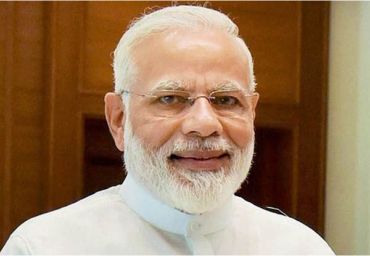
Narendra Damodardas Modi is an Indian politician serving as the 14th and current Prime Minister of India since 2014. He was the Chief Minister of Gujarat from 2001 to 2014 and is the Member of Parliament for Varanasi. Modi, a member of the Bharatiya Janata Party (BJP), is a Hindu nationalist and member of the right-wing Rashtriya Swayamsevak Sangh (RSS).
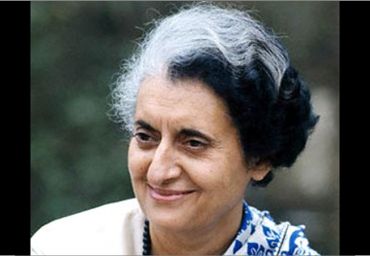
In June 1975, Prime Minister Indira Gandhi declared a state of emergency in India, which lasted until 1977. During this period, known as "The Emergency", many of her political opponents were jailed and opposition groups were banned. Modi was appointed the general secretary of the "Gujarat Lok Sangharsh Samiti", an RSS committee coordinating opposition to the Emergency in Gujarat. Shortly afterwards, the RSS was banned.
Modi was forced to go underground in Gujarat and frequently travelled in disguise to avoid arrest. He became involved in printing pamphlets opposing the government, sending them to Delhi and organising demonstrations.
Modi was also involved with creating a network of safe houses for individuals wanted by the government, and in raising funds for political refugees and activists. During this period, Modi wrote a book in Gujarati, Sangharsh Ma Gujarat (In the Struggles of Gujarat), describing events during the Emergency.
Among the people he met in this role were traded unionist and socialist activist George Fernandes, as well as several other national political figures. In his travels during the Emergency, Modi was often forced to move in disguise, once dressing as a monk, and once as a Sikh.
Modi rose within the party and was named a member of the BJP's National Election Committee in 1990, helping organise L. K. Advani's 1990 Ram Rath Yatra in 1990 and Murli Manohar Joshi's 1991–92 Ekta Yatra(Journey for Unity). However, he took a brief break from politics in 1992, instead of establishing a school in Ahmedabad; friction with Shankersinh Vaghela, a BJP MP from Gujarat at the time, also played a part in this decision.
Modi returned to electoral politics in 1994, partly at the insistence of Advani, and as party secretary, Modi's electoral strategy was considered central to the BJP victory in the 1995 state assembly elections. In November of that year, Modi was elected BJP national secretary and transferred to New Delhi, where he assumed responsibility for party activities in Haryana and Himachal Pradesh. The following year, Shankersinh Vaghela, a prominent BJP leader from Gujarat, defected to the Indian National Congress (Congress, INC) after losing his parliamentary seat in the Lok Sabha elections.
Modi, on the selection committee for the 1998 Assembly elections in Gujarat, favoured supporters of BJP leader Keshubhai Patel over those supporting Vaghela to end factional division in the party. His strategy was credited as key to the BJP winning an overall majority in the 1998 elections, and Modi was promoted to BJP general secretary (organisation) in May of that year.